





How Ahrefs became ISO 27001 certified in 3 months
Reference case study. This material documents a real journey of ISO27001 and is kept as an example of how an expert-backed compliance platform can formalize an established engineering organization.
The Challenge: Ahrefs needed formal assurances for corporate customers, without replacing its engineering culture with a separate compliance bureaucracy.
The Approach: Existing infrastructure and security practices have been transformed into a practical ISMS, material gaps have been prioritized, evidence has been organized centrally, and specialists have carried out a large part of compliance coordination.
The Results:
- audit-ready in weeks rather than a conventional multi-month preparation cycle;
- a reduction of approximately 80 % in the preparation time for audit under the reference commitment;
- substantially lower external-consulting overhead than a traditional high-touch engagement;
- Minimal disruption for engineering and infrastructure teams.
About Ahrefs
Ahrefs is a Singapore-based SEO and marketing technology company founded in 2010. its platform is used by marketers, agencies and to analyze backlinks, keywords, competitors and search performance.
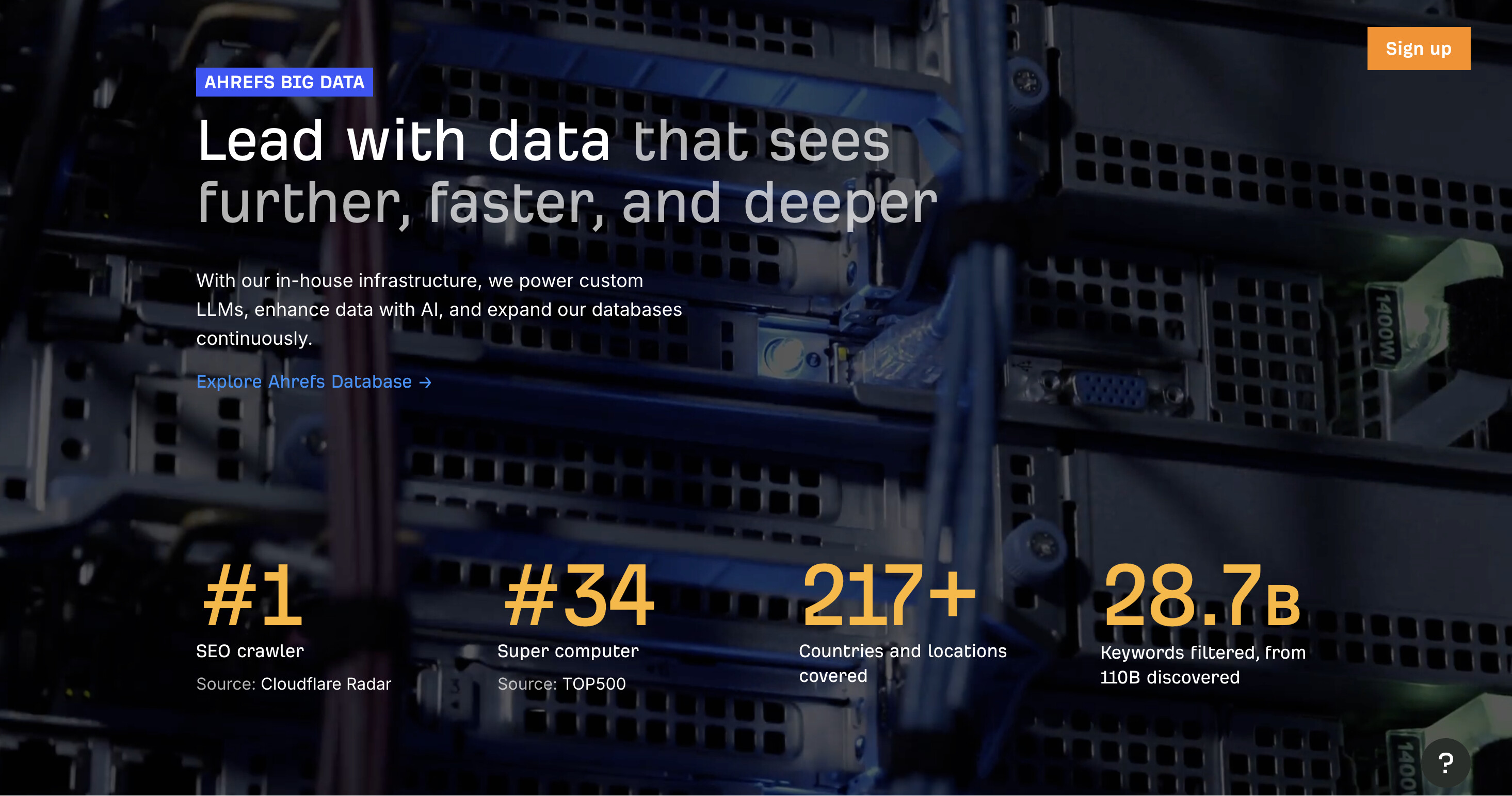
The company operates much of its internal infrastructure to support continuous web scanning and very large data sets. This operating model creates a mature technical environment, but business buyers still need standardized evidence that security governance is documented, repeatable and independently evaluable.
The challenge
The driver was different: as the business activity grew, prospects began to demand insuranceISO27001 andSOC2.
Therefore, the project had to meet several objectives simultaneously:
- strengthening customer confidence through recognised insurance;
- preserve the existing engineering culture of the company;
- make ISMS reflect a real infrastructure, rather than a generic template;
- minimizing manual work for engineers and security personnel;
- reach the audit preparation quickly enough to support active business opportunities.
The difficult part of ISO27001 is to rarely write a long list of controls, deciding what is enough for the real risks of the organization, documenting how the controls work, and proving that the system isined over time.
Why the traditional approach created friction
A conventional route can involve hiring dedicated internal compliance staff or strong reliance on external consultants. Both can be costly for a technical company when the context needs to be transferred repeatedly.
The reference experience has highlighted a common problem: teams can understand individual ISO27001 controls but are still unsure about the scope, the quality of the evidence and what “sufficient” implementation shows in practice.
Teams can start treating each control as an isolated project and assume that everything needs to be refined before talking to an auditor.
A better model is iterative: identify real gaps, establish a working management system, prepare evidence and continue to improve them over time.
Transforming existing practices into an ISMS
The successful approach in this reference case had three main parts.
1. Design around existing operations
Instead of imposing unrelated processes, the compliance program documented how security and infrastructure already work.
This matters because a policy that describes a fictitious process is difficult to operate and difficult to audit.
Centralization of evidence and coordination
Risk mapping, policy work, control evidence, supplier information and audit preparation were managed as a single program. subject experts still provided technical evidence, but were not responsible for orchestrating each compliance task.
3. Prioritize meaningful gaps
The program focused on the differences between documented expectations and actual operations, then filled gaps that significantly affected security and audit preparation.
This is the model that ZebraByte supports through its cloud platform: the organization can operate the system itself, a professional advisor can manage it for customers, or ZebraByteManaged Compliance can take over more of the operational work.
Results
Rapid readiness
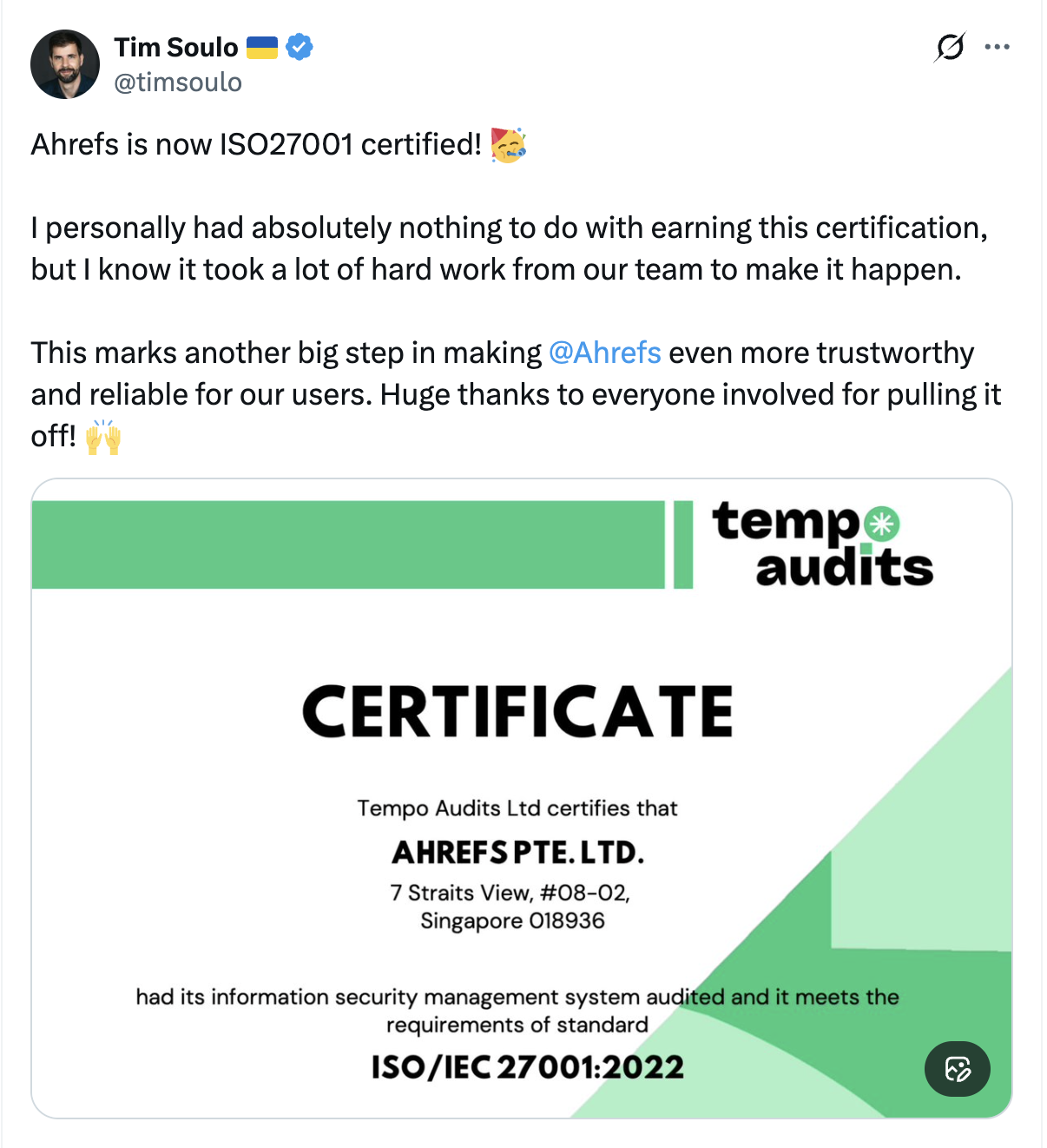
The reference project moved from structured compliance work to audit preparation in about ten weeks and achieved ISO27001 certification in about thirteen weeks.
The important point is not that every organization will follow the same timeline. Purpose, maturity, auditor availability and repair work affect all duration. The transferable lesson is that an organization with strong existing security practices can move much faster when these practices are mapped and proven effectively.
Conserving internal resources
A platform plus a model of specialist support can remove much of the work that is normally in engineering:
- mapping controls;
- organizing evidence;
- maintaining policy workflows;
- monitoring of risks and remediating them;
- assessing third parties;
- coordinating audit preparation.
Engineering still holds the technical reality. you simply don’t have to own the administrative machine to prove it.
Financial impact
The reference commitment a 70-80% reduction in consultancy fees compared to a traditional approach in the style of large-scale consultancy, along with a low internal overlap.
This type of savings depends heavily on the scope and size of the organization, so it should be treated as a case-specific outcome, rather than a universal promiseZebraByte.
Why it worked
Ahrefs already had a strong security and engineering discipline. formalization of what worked, automation of repeatable work and concentration of specialist efforts in places where judgment was necessary.
Once the ISO27001 foundation has existed, related assurance work such as SOC2, privacy and AI governance could reuse parts of the same risk, control, and evidence model.
What other organizations can learn from this case
A mature technical team approaching ISO27001 should ask:
- Which security processes already work reliably but lack official evidence?
- Which checks really require repair, rather than more documentation?
- Can evidence be continuously collected from existing systems?
- Are policies aligned with real operations?
- Is the time of the specialist spent on trial or on repeated administration?
- Can the resulting control library support other frames later?
The main lesson is that Compliance should translate strong engineering into reliable evidence, not replace strong engineering with paperwork.
